What Sustainability in Construction Materials Means
Across the GCC and around the world, sustainability is shifting from a box to check to a client expectation. It’s no longer just something governments are pushing, it’s something clients are starting to ask for, and something projects are increasingly being measured against. If you’re starting to think about how this applies to your projects and how to keep up, you’re in a good place to start.
A lot of people still associate sustainable materials with compromise, whether that’s on look, quality, or budget. But that’s changing. Sustainability becoming the norm doesn’t mean the standards you care about have to drop, it just means the bar for what’s available has gone up.
So what’s actually changing, and what does it mean for how you source materials? Let’s break it down.
Nationwide initiatives such as the UAE Net Zero 2050 aim to reach net zero emissions by 2050. As part of this strategic plan, buildings are a major focus area, given how much they contribute to the country’s overall energy use, and the goal is to minimise the environmental impact of sectors like construction. As the timeline gets closer and the country continues to expand on this plan, the initiative is increasingly filtering into real policies and regulations.
At this point, Dubai and Abu Dhabi both have green building standards that developers need to comply with. Rating systems like LEED, Estidama, and Al Sa’fat score projects based on where materials come from and how sustainable they are.
There are a few different certifications and standards that can help you identify whether the materials you’re buying are genuinely sustainable, not just labelled that way.
This is generally the most recognised certification when working with wood-based products. Because these products come from forests around the world, an FSC certification essentially guarantees that you’re buying from a supplier who only sources wood from forests that are managed responsibly, with replanting happening, biodiversity protected, and the rights of local communities and workers respected.
This is about what happens after the product is installed. A low-emission board is rated on how much formaldehyde and other volatile organic compounds (VOCs) it releases over time. Everything comes at a cost, and a cheaper board is more likely to use adhesives with higher concentrations of these compounds, which then end up in your space, in the air you breathe, and the air your kids breathe, long after the project is finished.
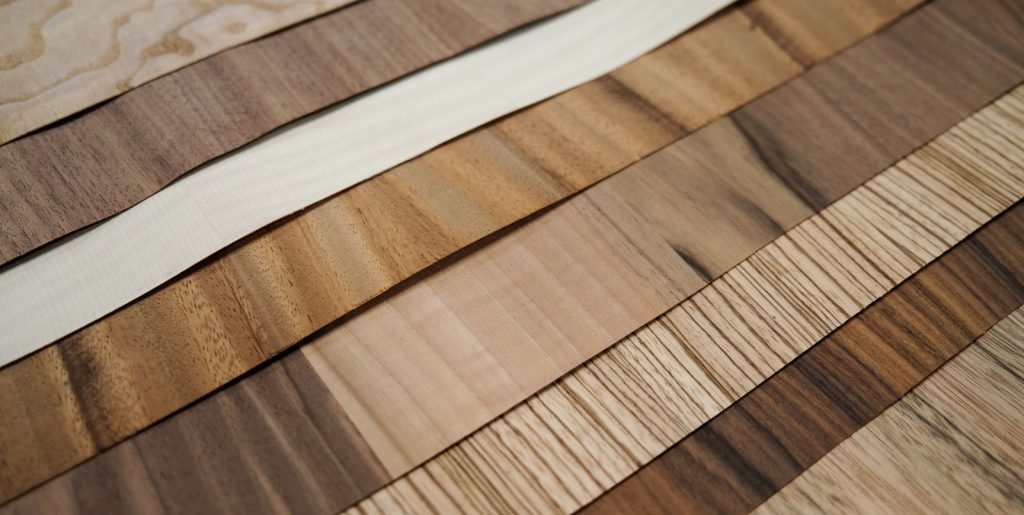
Beyond certification, it’s worth looking at the bigger picture, where the material actually comes from and what happens to it at every stage. Responsibly sourced veneers often use engineered or reconstituted wood, made from smaller, faster-growing species pressed and finished to achieve the same look as rarer timbers, taking pressure off slower-growing forests. On the production side, manufacturers that minimise offcuts, recycle materials, or repurpose waste are reducing the footprint of a product before it even reaches your site.
Sustainability isn’t a limitation for your project. Around the world, some of the most beautifully executed projects meet sustainability expectations and go beyond them. A lot of this comes down to biophilic design, an architectural and interior design philosophy that integrates natural elements into built environments. You’ve likely seen this around your city in buildings that incorporate greenery into their design, sometimes a rooftop garden, shrubs hanging from balconies, or tree-lined streets. What you don’t always see is what’s happening behind the scenes: natural lighting that reduces energy consumption, and sensory elements like air and water that create a more connected experience.
Beyond sustainability, biophilic design has also been shown to reduce stress, encourage faster recovery (which is why you’ll often see greenery in hospitals), and improve focus, which is why most people would rather have their desk facing a window than a wall.
As a company, we offer FSC certification across our range, which means the suppliers we work with anywhere in the world are held to the same standard, ethically sourced, responsibly managed. We don’t do this just because it’s expected. As one of the many players in this industry, we believe we have a role to play in making sure the standard is held.
If you’re looking to finish a project to perfection, we suggest placing just as much emphasis on sustainable procurement as you would on good procurement generally. After all, a product is only as good as its original source and finishing.
We’re happy to walk you through what makes a product sustainable, and to connect you with products from all over the world. Get in touch with our team today to explore our full range and get matched with the best products and pricing.
For enquiries about building materials in the UAE, including decorative papers, laminate sheets, and wood veneers, specifications, and project support, reach out to our team. We’d be happy to assist with inquiries and questions.
GULF17
Typically replies within minutes
Any questions related to What Sustainability in Construction Materials Means?
WhatsApp Us
Online | Privacy policy
WhatsApp us